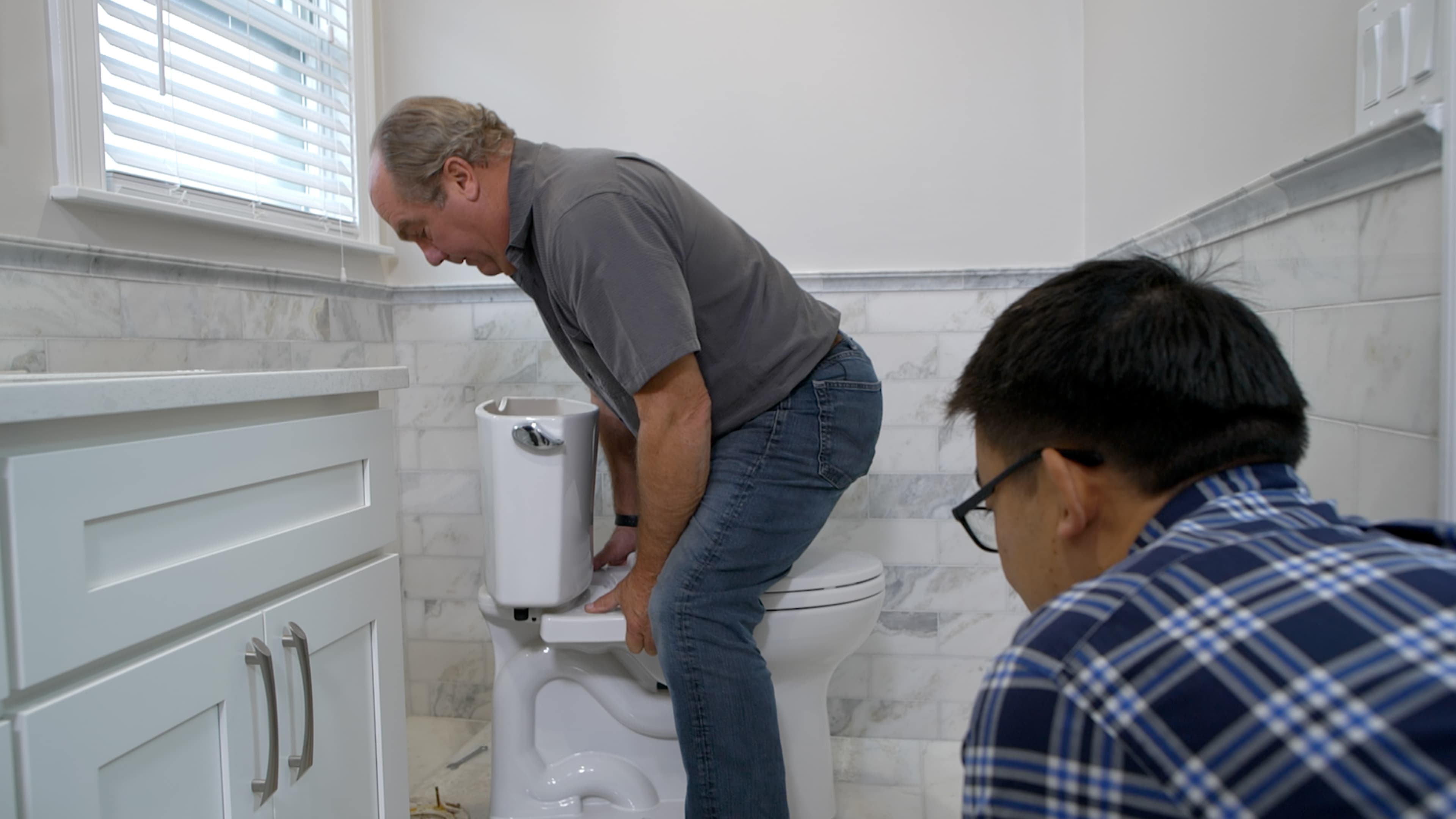
Sitting on a toilet is already a vulnerable position. A rocking porcelain bowl underneath you only makes it worse. Luckily, this issue usually doesn’t require a house call from a plumber. If you can identify why the toilet wobbles, the fix is usually straightforward.
Common Toilet Wobble Causes
Toilet connection is relatively straightforward. A flange connects the drainpipe to the floor, and two closet bolts hold the toilet to the flange. A wax ring sits between the two, preventing leaks and gases from escaping. With such a simple setup, there are only a few potential wobble causes:
-
- Loose closet bolts: The nuts securing the toilet to the flange have loosened over time. Always check these first.
-
- A compressed or deteriorated wax ring: Too much weight or overtightened bolts can squeeze the wax ring out, leaving the toilet connection feeling loose.
-
- Damaged or cracked floor flange: The floor flange can crack, bend, or rust, preventing a secure connection.
-
- Uneven or loose flooring: If the finished floor was installed poorly, the flange is too far below the surface of the finished floor, or tiles are loose under the toilet, the toilet can become very wobbly.
-
- Subfloor rot: If the toilet has been leaking, the subfloor around the drain can rot away, removing any chance of toilet stability.
There may even be more than one cause of the wobble. A rotted subfloor can lead to pressure on the flange, which may then snap. It’s important to find the causes before the repair.
How to Fix a Wobbly Toilet
Before you begin, be sure to have the following items on hand.
Materials
Tools
-
- Rag
-
- Flange repair kit (if needed)
Steps for Fixing a Wobbly Toilet
-
- Try the simplest fix first. Pop the decorative caps offthe closet bolts at the base of the toilet holding the toilet to the flange. Check if the nuts are loose. Hand-tighten each nut a little bit at a time, alternating on each side, until the toilet feelssnug and doesn’t wobble. Be careful not toon’t over tighten or the porcelain may crack.
-
- If the toilet bolts weren’t loose or the toilet is still wobbly, shut off the water supply valve. With the water off, flush the toilet so all the water empties from the tank and into the bowl. Using a turkey baster or sponge, remove the water from the bowl and empty it into a bucket. Then, disconnect the supply hose from the bottom of the tank with water pump pliers.
-
- Use a wrench to remove the nuts holding the toilet to the ground floor. It may be necessary to hold the bolt with a set of pliers and loosen the nut with the wrench if the bolt keeps spinning. Once both sides are off, stand over the toilet and lift it off the floor. Carry it somewhere nearby and put it down, preferably on an old towel.
-
- Inspect the wax ring on the flange and the toilet. The wax ring should be deformed but present (it may stick to the flange, the toilet, or both). Wax remnants mean there was a seal and likely not the cause of the wobble. Clean any wax remnants from the floor flange and the bottom of the toilet using a bit of mineral spirits and a rag to remove the residue.
-
- Check the height of the toilet flange relative to the floor as well as the condition of the floor under and around it. Ideally, the flange would sit on top of the finished flooring. It may also sit flush with the height of the finished floor, but not lower than the floor. If it’s lower than the finished floor height and the floor is in good condition, consider installing a flange repair ring, an extra-thick wax ring, or a rubber/wax combination ring. Note: If there is noticeable subfloor rot, this project goes from a parts swap to a more involved renovation.
-
- If the flange is at the correct height, inspect it for damage. If the flange is cracked, bent, or damaged in any way, use a flange repair kit to fix the issue. Install the new flange over the cracked one and secure it to the floor using stainless steel screws.
-
- With the issue found and repaired, it’s time to replace the toilet. Slide the new closet bolts into the floor flange and place the new wax ring on the flange.
-
- Place the toilet on top of the wax ring, being careful to align the closet bolts with the holes in the bottom of the toilet base. If you can’t see the bolts around the toilet, it would be good to enlist a helper to guide one bolt while you align the other. Press straight down on the toilet so that it compresses the wax ring evenly.
-
- Install washers and nuts that came with the closet bolts. Hand-tighten the toilet to the floor using the nuts,being careful to tighten each side evenly, alternating from side to side, and being careful not to overtighten. Trim excess bolt length if necessary with a mini hacksaw. Snap the decorative caps back on the bolts.
-
- Reattach the supply hose, turn on the water, and check for wobbles and leaks.