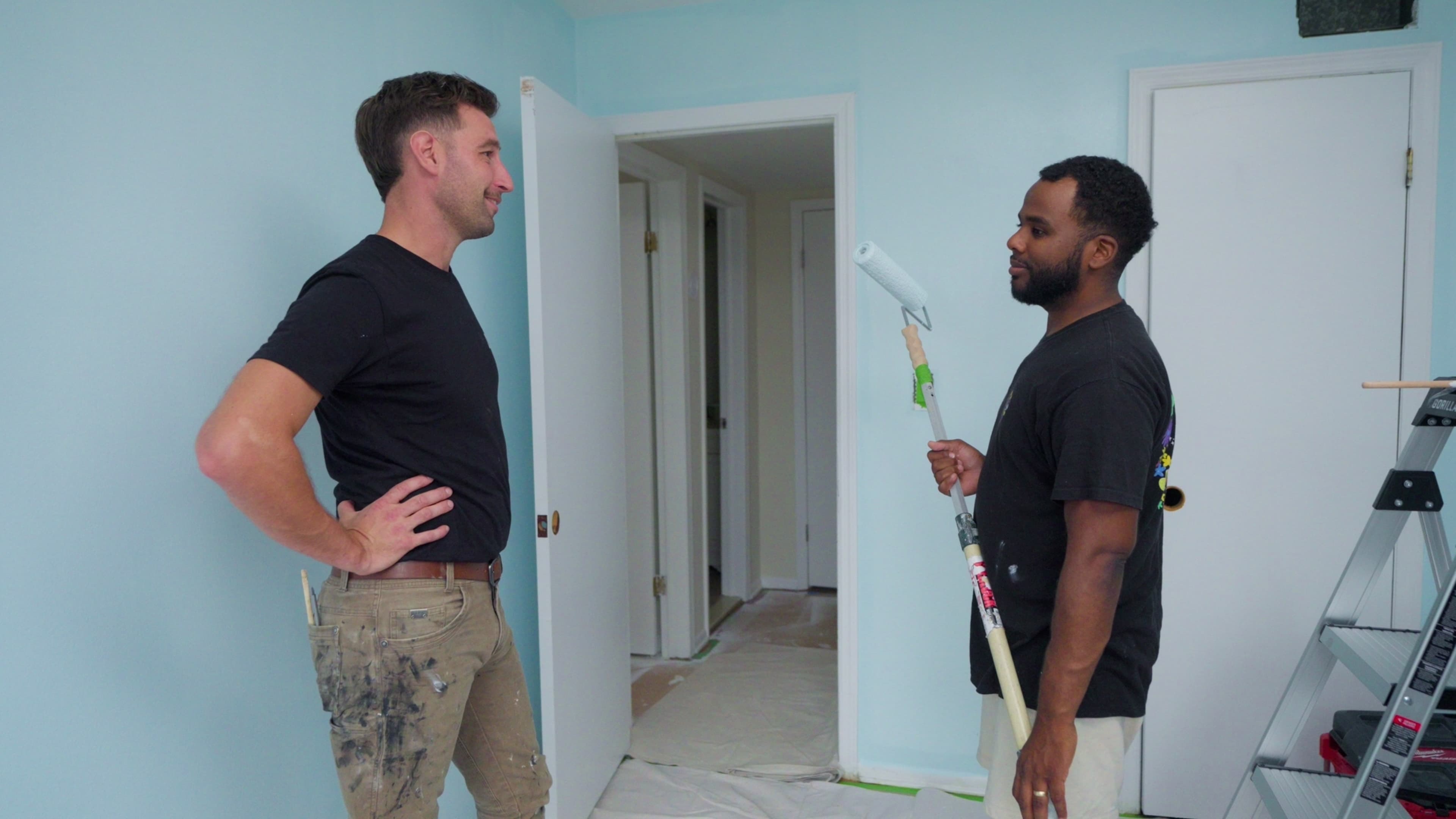
Painting is one of those things that anyone can do, but not everyone can do well. Contractor Zack Dettmore showed our homeowner, Jorge, some tips and tricks that professional painters use to work fast and efficiently while still achieving top-quality results.
Sequence Matters
If you want to work efficiently, plan your painting sequence. Zack likes to paint the trim first so if he accidentally paints the wall, the touch-up is much easier. Then, Zack paints the walls before the baseboard as paint rollers often leave a bit of splatter. The baseboards are last, where Zack can easily cover any splatter or drips and get that clean, fresh look.
Unload the Can, Load the Brush
Zack likes to pour as much paint as you can in the roller tray so that the paint can is light and easy to carry. Then, rather than loading the brush with paint and dragging it off on the rim, Zack suggests loading the paint and tapping the excess off on the insides of the can. This helps keep the brush loaded without making a mess.
Tips for Cutting In
When it’s time to cut in, Zack doesn’t like to use tape. His tip for efficient painting is to load the brush, put plenty of paint onto the wall, and then move the paint into the corner with a smooth, steady stroke, flattening out any drips along the way. This applies for walls, ceilings, trim, and anywhere else that requires cutting in.
Clean Up the Paint Roller
Paint rollers are always full of lint and loose fibers. If you don’t remove them, they’ll end up in the paint and on your freshly painted walls. To avoid this, Zack suggests rolling up and down on a strip of painter’s tape to remove those loose bits.
Twirl the Paint Rollers
One of the biggest time-wastes on a painting project revolves around loading the roller, where the painter has to stop painting, bring the roller to the tray, bring it back to the wall, and continue. Zack suggests loading the roller with plenty of paint, and then slowly twirling the roller from the tray to the wall to avoid dripping.
Roll Toward the Arm
When rolling paint onto the wall, you want to move toward the direction of the roller arm. The arm side of the roller will have slightly more pressure, which means the opposite side can feather the paint in and blend it. If the arm is on the right, start on the left side of the wall and work to the right, rolling straight up and down and overlapping the previous past.