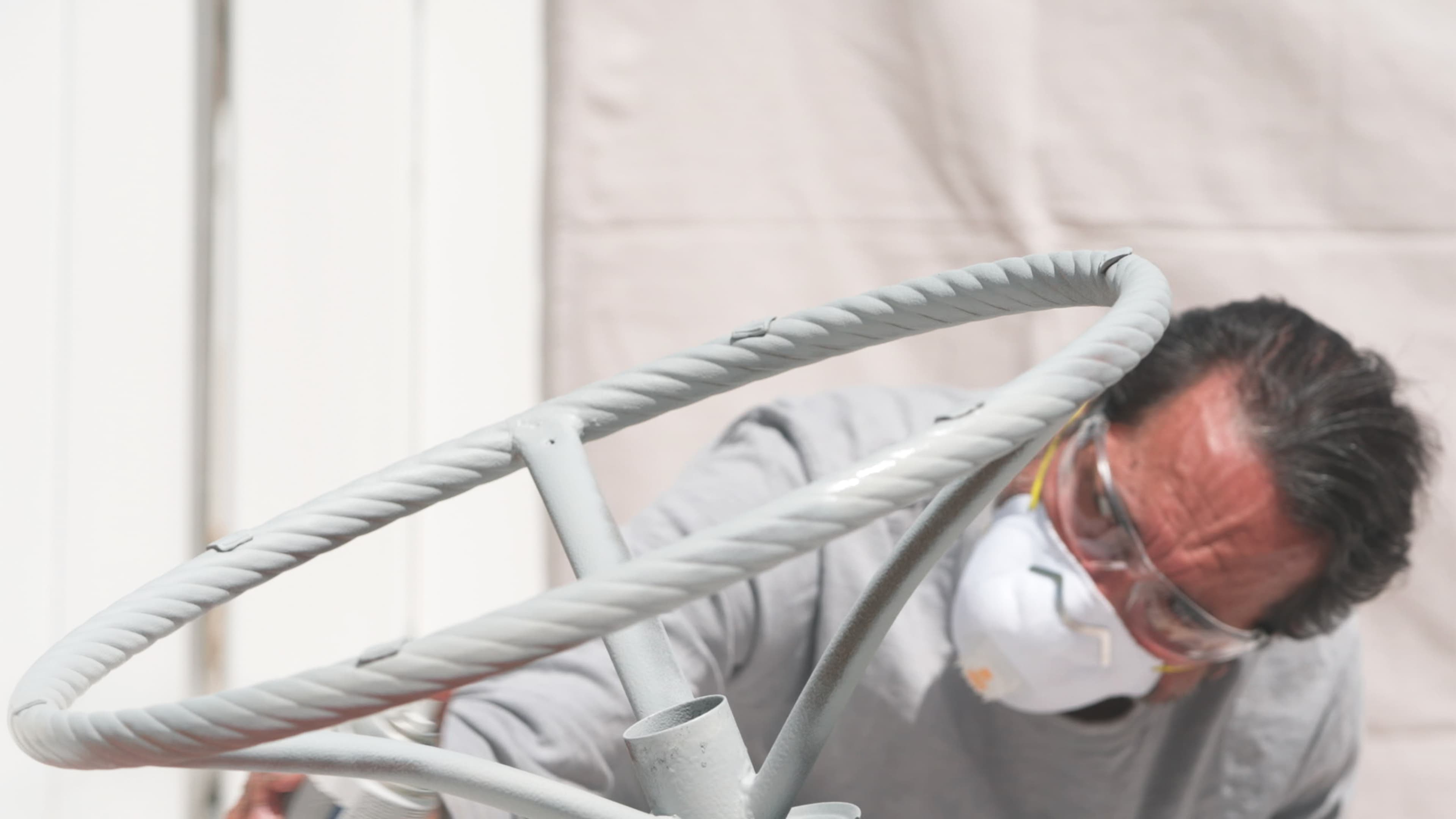
Now that you have a home you can call your own, you probably have filled it with furniture you couldn’t have when you were a renter. One type of furniture you’ve probably invested in recently is patio furniture. In your rush to get it, you probably didn’t consider how much of a beating it can take from the elements sitting all year outdoors. Now, the once gorgeous outdoor furniture you bought a few seasons ago looks like an eyesore, and unfortunately, you don’t have the budget to easily replace it. Here are a few tips for painting rusty metal furniture to bring it back to life so you can resume your outdoor entertaining this spring and summer.
Why Furniture Rusts
Of all the guests that you’ll be inviting to your outdoor events, rust isn’t one of them. However, this uninvited guest can show up with a vengeance on lavish outdoor furniture. The combination of oxygen, iron, and moisture, which translates into a chemical reaction known as “oxidation,” can wreak havoc on metal furniture. Other environmental factors, such as saltwater and acid rain, can accelerate the chemical reaction. Another accelerant is deep scratches and chips on the furniture, which remove the protective powder coating, exposing the raw metal to the elements. What results is a reddish hue in areas of the furniture where water tends to collect. The surface of the furniture may become gritty and coarse like sandpaper and may experience bubbling or flaking.
What Furniture is Least Likely to Rust
When choosing outdoor furniture, it is important to consider both aesthetics and durability. To keep rust at bay, it’s ideal to choose a metal that will withstand rain and moisture. Aluminum is an undisputed all-star when it comes to fighting rust since it is naturally rust-proof. Unfortunately, it can still corrode when it is exposed to moisture, forming a white, chalky residue sometimes referred to as “white rust.” High-grade stainless steel or galvanized steel may be an even better choice for outdoor metal furniture. However, if you want to ditch the metal entirely, other options include poly-lumber, which is essentially recycled plastic, or teak. Another option is to restore rusty furniture. Here’s how.
How to Restore Metal Patio Furniture
Materials
- Painters tape
- Drop cloths
- Plastic sheeting
- Rags
- Shims
- Microfiber cloths
- Denatured alcohol
- Rust primer
- Metal primer
- DTM paint
- Paint sticks
Tools
- N95 masks
- Nitrile gloves
- Safety glasses
- Flexible scouring pad
- Sanding pad
- Wet-dry vac
- Paint brush
- Small paint roller (⅜-inch nap)
- Paint tray
- Start by preparing the area by covering any surfaces you don’t want to paint with drop cloths.
- Next, using painter’s tape, tape everything you won’t be painting. This includes the top, sides, and bottom of the chairs.
- Use a flexible sanding or scouring pad to remove any of the loose debris and to clean up some of the rust.
- Use a wet-dry vacuum to remove any of the dust and residue that sanding might have caused. Once vacuumed, wipe the furniture with a rag and denatured alcohol.
- Use a rust spot primer made for metal. Spray only the rust spots. The rest will be primed in the next step.
- Spray a coat of standard primer onto the metal surfaces. Make sure not to prime over the rust primer. Let the surface dry for 30 minutes.
- Use the paint roller to apply DTM (direct-to-metal) paint. DTM paint should go on green but quickly turn black, if that’s the desired color. For tougher-to-reach areas, use a paintbrush and a light touch to coat the surface.
- Allow the paint to dry for about two hours, or according to the manufacturer’s recommendations.
How to Prevent Furniture From Rusting
Prevention is the best way to avoid rust forming on your furniture. Here are some tips on keeping furniture from rusting.
- Avoid purchasing metal outdoor furniture.
- Cover furniture with breathable coverings to keep moisture off the metal.
- Coat your furniture with a clear protective coat before use.
- Cover chipped paint with touch-up paint.
- Remove dirt and bird droppings immediately.
- Add plastic or rubber to the feet of the furniture to avoid contact with the ground where rust starts.
Frequently Asked Questions
Is it safe to restore rusty furniture if I have pets or children?
Yes. The rust itself is not a hazard. Instead, it is the fine particles produced by sanding that can be hazardous to pets and children. Using a wet sanding technique or a non-toxic soak, such as vinegar, will keep rust from becoming airborne.
How do I know if a piece of furniture is too far gone to be restored?
Check whether rust is surface or structural. If it is surface rust, it can be restored. However, if rust forms pits at the joints or on the bottoms of the furniture legs, the furniture may be unsafe for use.