It’s practically everyone’s worst nightmare: You go to flush the toilet, and instead of the water spinning around the bowl and flushing down the drain, the water level begins to rise. As it swells closer and closer to the rim, panic sets in. Then, it overflows, spilling dirty toilet water out onto the bathroom floor, seeping through the floor, and wicking up the walls. Even just the thought of it can set your heart racing.
Toilets overflowing always seem to happen more often on TV shows or in the movies, but they do happen in real life. And while it’s usually not hundreds of gallons spilling out into the room, it is messy and gross. Here’s our easy-to-understand explainer on why toilets overflow and what you can do to stop them.
Why Do Toilets Overflow?
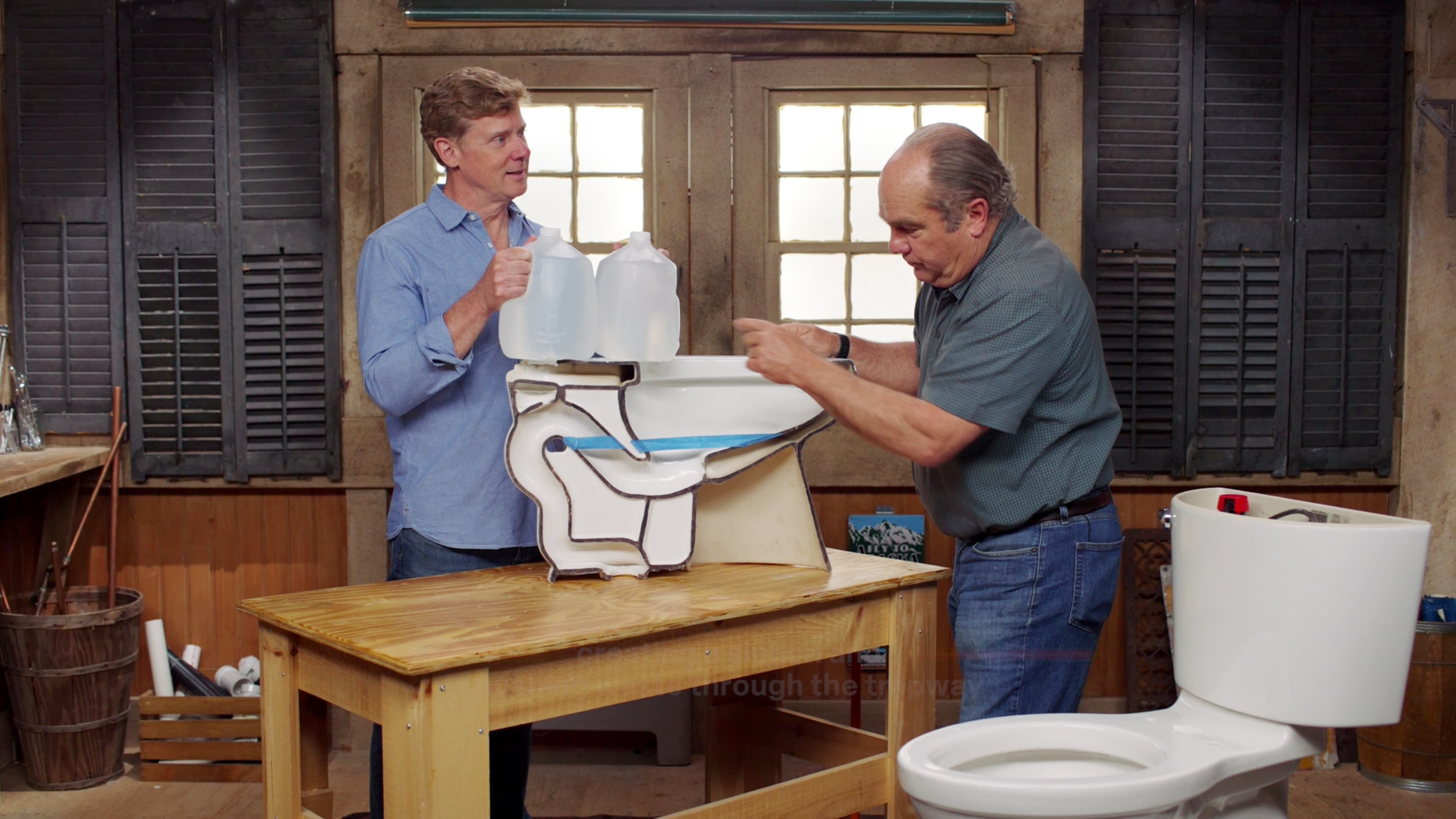
To understand why toilets overflow, you need to understand how they work. Toilets use gravity, water flow, and air pressure to move waste from the bowl to the drain system. Here’s how.
- When you press the handle, a small flapper in the tank lifts, allowing a store of water to rush into the bowl.
- The surge of water pushes waste through the bowl and into the toilet’s built-in trap (a curved section designed to hold water and prevent sewer gas from entering the home).
- As the water moves through the trapway, it creates a siphon that pulls the waste down the drain and into the plumbing system.
- Once the tank empties, the flapper closes, air enters the trapway, breaking the siphon and filling the tank with the correct amount of water.
- A fill valve refills the tank, controlled by a float that shuts the valve off when it reaches the correct height. The toilet is then ready to flush again.
With that in mind, let’s look at some reasons why a toilet may overflow.
A Clog in the Toilet Trap or Drain
The most common cause of an overflow is a clogged trap or drain. This can be caused by solid waste, non-flushable items, larger-than-typical waste, or waste buildup. Even a partially blocked trap or drain can cause a backup.
A Blocked Main Drain Line
If flushing the toilet causes a backup or burping in other fixtures, such as the tub or floor drain, it could be a blocked main drain. This could be caused by buildup, tree roots, or even frozen traps in extreme weather. These overflows can be particularly nasty.
A Failing Float or Fill Valve
If a float or fill valve is malfunctioning, it will continue filling the tank. If the flapper allows it, the toilet will continue to run and occasionally flush. Or, the tank itself will begin to overflow into the overflow tube, sending excess water into the bowl.
Early low-flow toilets
The early low-flow toilets weren’t very good at removing waste effectively. As a result, they often end up with a restrictive buildup inside their traps that can cause clogs and eventually overflow.
Septic Issues
Similar to a clogged main drain, septic issues can force wastewater up into tubs and other lower drains. If the tub is able to fill up higher than the rim of the toilet on the same level, the toilet may overflow next. The result is a very nasty mess.
How to Stop a Toilet Overflow Quickly
In most cases, you can prevent an overflowing toilet from becoming a terrible mess. If you stay calm and do the following, you’ll minimize the overflow or even prevent it from breaching the top of the toilet bowl.
Shut Off the Water Supply
If you notice that your toilet is starting to overflow, quickly look under the tank for a hose, and follow that hose to where it connects to a valve coming through the floor or wall. Shut this valve and you’ll prevent more water from filling the tank and causing an overflow.
Stop Flushing
Flushing more is not going to solve your problem. You’ll simply be adding more water to an already poorly flowing system. Refrain from flushing and tell everyone else in the home to do the same.
Try Plunging
The most common cause for an overflow is a clog, and a flange-style toilet plunger can often clear it. There are two schools of thought when it comes to plunging toilets:
- Option 1: Fill the plunger bell with water, seat the flange over the drain opening, and push down sharply and slowly releasing pressure. This can force a clog through the system.
- Option 2: Seat the flange around the drain opening, push down slowly, and pull up sharply. This can pull the clog back into the bowl, where it often breaks up and flushes more easily.
Note: If the water level is very high, wait for it to drop slightly before plunging to avoid splashing.
Try a closet snake or toilet auger
A closet snake is designed to fit into the drain opening of a toilet, matching the curve. From there, the user twists a handle and pushes down on the auger, forcing the snake through the trap and breaking up the clog in the process. They’re the most effective way to clear a toilet clog to prevent an overflow.
When to Call a Plumber
Unfortunately, some overflows require professional attention. If you’re experiencing the following, give a pro a call:
- Frequent or repeated overflows
- Multiple fixtures are backing up at the same time
- A plunger or closet snake isn’t doing the job
- You suspect a sewer or main drain blockage
- The shutoff valve doesn’t stop the water flow
- You notice sewage odors or wastewater coming up through drains
A licensed plumber will be able to troubleshoot the situation quickly, repair internal components, and prevent the overflow from happening again.
Staying Ahead of Toilet Problems
When your toilet seems to have a mind of its own, it’s easy to get stressed out and panic. It’s a clear sign that something isn’t working like it’s supposed to. But by understanding how toilets work and how to act quickly to prevent a very messy situation, you’ll be able to stay ahead of your toilet problems and protect your home. And if not, don’t be afraid to call a professional for a little help.